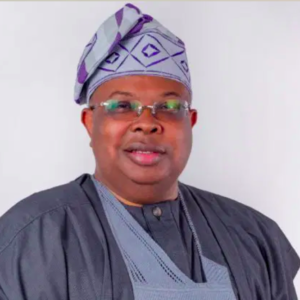
Mulayam Singh Yadav biography — the full story of the wrestler turned schoolteacher who became Uttar Pradesh’s three-time Chief Minister and founder of the Samajwadi Party.
Table of Contents
The Quick Picture
- Born November 22, 1939 in Saifai, Etawah District, Uttar Pradesh; died October 10, 2022 in Gurugram, Haryana
- Founder of the Samajwadi Party (October 1992); three-time Chief Minister of Uttar Pradesh (1989–91, 1993–95, 2003–07)
- Served as Union Defence Minister of India (1996–1998); seven-time Member of Parliament in the Lok Sabha
Who Is Mulayam Singh Yadav?
Few figures shaped the political landscape of post-Independence Uttar Pradesh more decisively than Mulayam Singh Yadav. A village wrestler who became a schoolteacher, a schoolteacher who became a legislator, and a legislator who founded one of India’s most influential regional political parties, he was at the centre of Uttar Pradesh politics for more than five decades.
He was known to millions simply as Netaji, a Hindi term of deep respect meaning “respected leader,” a title that came to attach to him more strongly than his own name in the political circles where he operated. The founder of the Samajwadi Party in October 1992 and three-time Chief Minister of Uttar Pradesh, he was also a powerful national figure who served as Union Defence Minister of India between 1996 and 1998.
Mulayam Singh Yadav’s legacy is contested, complicated, and consequential. He was the architect of a political coalition built around Yadavs, Muslims, and other backward classes that fundamentally reshaped Uttar Pradesh electoral arithmetic. He was also the father of Akhilesh Yadav, who would go on to serve as Uttar Pradesh Chief Minister between 2012 and 2017 and inherit the leadership of the party his father had built. He passed away on October 10, 2022, in Gurugram, closing a political career spanning more than six decades.
Quick Facts: Get to Know Mulayam Singh Yadav
| Detail | Information |
|---|---|
| Full Name | Mulayam Singh Yadav |
| Popular Title | Netaji |
| Date of Birth | November 22, 1939 |
| Place of Birth | Saifai, Etawah District, Uttar Pradesh |
| Date of Death | October 10, 2022 |
| Place of Death | Medanta Hospital, Gurugram, Haryana |
| Age at Death | 82 years |
| Nationality | Indian |
| Religion | Hinduism |
| Caste | Yadav (Other Backward Class) |
| Father | Sughar Singh Yadav (farmer) |
| Mother | Murti Devi |
| Wives | Malti Devi (1957–2003); Sadhana Gupta (m. 2003, d. 2022) |
| Children | Akhilesh Yadav (with Malti Devi); Prateek Yadav (with Sadhana Gupta) |
| Brothers | Four (Ram Ratan, Abhayram, Shivpal, Rajpal) |
| Education | B.A., B.T., M.A. in Political Science |
| Profession | Politician, former schoolteacher, lecturer |
| Political Party | Samajwadi Party (founder) |
| First Elected | 1967 (Uttar Pradesh Legislative Assembly) |
| CM Tenures | 1989–91, 1993–95, 2003–07 |
| Defence Minister | 1996–1998 |
| Lok Sabha Tenures | 7 (Mainpuri, Azamgarh, Sambhal) |
| Political Mentor | Ram Manohar Lohia |
Early Life & Background: A Wrestler from Saifai
Mulayam Singh Yadav was born on November 22, 1939 in Saifai, a small village in the Etawah district of Uttar Pradesh, into a family of farmers belonging to the Yadav community. His father, Sughar Singh Yadav, was a farmer of modest means, and his mother was Murti Devi. He was the second of five sons in the family, with one older brother, Ram Ratan Singh Yadav, and three younger brothers — Abhayram, Shivpal, and Rajpal.
The family’s economic circumstances were limited, but their social standing within the Saifai community was rooted in the traditional Yadav identity. Long before he became a politician, Mulayam was known in the village as a strong, disciplined youth who was deeply involved in traditional Indian wrestling (kushti). The wrestling pit was, in many ways, his first political training ground. It taught him physical endurance, the value of patience, and the importance of timing.
His wrestling background remained part of his political identity throughout his life. Even as Chief Minister and Union Minister, he was frequently photographed at wrestling akhadas (training grounds), and the image of Netaji as a strong, earthy, rural-bred leader rather than a polished metropolitan politician was central to how he connected with his core voter base.
Education: Three Degrees Built Around Political Thought
Mulayam Singh Yadav pursued his education despite the family’s modest economic circumstances. He earned a Bachelor of Arts (B.A.), followed by a Bachelor of Teaching (B.T.) degree, and finally a Master of Arts (M.A.) in Political Science. The progression of those qualifications shows a man methodically preparing for a public life, even if politics had not yet formally claimed him.
Before entering politics, he worked as a schoolteacher and later as a lecturer in inter-college institutions in Mainpuri district. Teaching gave him both economic stability and the kind of community standing that translates powerfully into local politics. He spent years explaining ideas to young people who would, in time, become his voters.
His intellectual development was shaped most decisively by Dr. Ram Manohar Lohia, the towering Indian socialist thinker whose ideas about social justice, anti-caste politics, and the empowerment of backward communities became the philosophical foundation of Mulayam’s entire political career.
Career Journey: Six Decades of Power Politics
Early Career: Entering Politics (1967–1977)
Mulayam Singh Yadav’s first electoral victory came in 1967, when at the age of 28 he won a seat in the Uttar Pradesh Legislative Assembly on a ticket from the short-lived Samyukta Socialist Party. The party would soon merge into the broader Janata Party amalgam, but the win established him as a serious local political force.
He was re-elected in 1974, but his second term was disrupted dramatically. During the national Emergency declared by Prime Minister Indira Gandhi in 1975, he was among the opposition politicians arrested and held in detention for 19 months. That experience of political imprisonment hardened his commitment to anti-establishment politics and gave him the kind of credibility that opposition politicians of that generation carried for the rest of their careers.
After his release in 1977, he won back his assembly seat and served briefly as Uttar Pradesh’s Minister for Animal Husbandry.
Building a Base (1977–1989)
In 1980, he lost an assembly election and joined the Lok Dal party, eventually becoming president of its Uttar Pradesh unit. When the party split in 1982, he led the Lok Dal-B faction and was elected to the Uttar Pradesh Legislative Council, the upper house of the state legislature.
Through the 1980s, he steadily built the network of supporters, alliances, and community relationships that would soon make him one of the most powerful figures in Uttar Pradesh politics. He was building, brick by brick, what would later become the Samajwadi Party.
First Term as Chief Minister (1989–1991)
The breakthrough came in 1989. The Janata Dal emerged as the single largest party in Uttar Pradesh, displacing the Indian National Congress, with outside support from the BJP. Mulayam Singh Yadav was sworn in as Chief Minister of Uttar Pradesh for the first time, beginning what would eventually be three separate terms in the state’s top office.
His first term was defined by the political turbulence surrounding the Babri Masjid in Ayodhya. When the BJP withdrew its support from his government in 1990 following confrontations between police and right-wing Hindu activists at the disputed site, his administration survived briefly with Congress backing before falling in April 1991.
Founding the Samajwadi Party (October 1992)
In October 1992, Mulayam Singh Yadav made the decision that would define his political legacy. He founded his own party, the Samajwadi Party (SP) — literally, the Socialist Party — built around the ideological tradition of Lohia’s socialism but specifically tailored to the demographic realities of Uttar Pradesh.
The timing was significant. The demolition of the Babri Masjid by Hindu right-wing activists in December 1992 triggered communal violence across India and reshaped the country’s political landscape. Mulayam and the newly founded SP emerged as outspoken advocates for India’s Muslim community, a position that would consolidate Muslim voters into the SP’s core base for the next three decades.
Second and Third CM Terms (1993–95, 2003–07)
In November 1993, the Samajwadi Party allied with the Bahujan Samaj Party (BSP) for the Uttar Pradesh assembly elections. The unusual alliance succeeded in keeping the BJP from returning to power, and Mulayam returned as Chief Minister for a second term, supported by Congress and the Janata Dal.
His third and final tenure as CM came in 2003, after a complex sequence of political realignments led to the collapse of a BJP-supported Mayawati government. He served as Chief Minister until 2007, when the BSP under Mayawati returned to power.
Union Defence Minister (1996–1998)
Between his second and third CM terms, Mulayam Singh Yadav served as Union Defence Minister of India from June 1996 to March 1998 under the United Front governments led by Prime Ministers H. D. Deve Gowda and I. K. Gujral. His tenure as Defence Minister placed him at the heart of national security policy at a sensitive moment in Indian history.
Member of Parliament (1996–2022)
He was elected to the Lok Sabha seven times, representing constituencies including Mainpuri, Azamgarh, and Sambhal. He was Mainpuri’s representative at the time of his death in October 2022, and his Mainpuri seat was won in a subsequent by-poll by his daughter-in-law, Dimple Yadav.
Career Timeline & Major Milestones
| Year | Milestone |
|---|---|
| 1939 | Born on November 22 in Saifai, Etawah District, Uttar Pradesh |
| 1967 | First elected to Uttar Pradesh Legislative Assembly (Samyukta Socialist Party) |
| 1975–1977 | Detained for 19 months during the Emergency |
| 1977 | Re-elected to UP Assembly; served as Minister for Animal Husbandry |
| 1982 | Elected to Uttar Pradesh Legislative Council |
| 1989 | Sworn in as Chief Minister of Uttar Pradesh for the first time |
| 1991 | First CM term ends after BJP and Congress withdraw support |
| October 1992 | Founded the Samajwadi Party (SP) |
| 1993 | Returned as Chief Minister after SP-BSP alliance victory |
| 1995 | Second CM term ends |
| 1996–1998 | Served as Union Defence Minister of India |
| 2003 | Sworn in as Chief Minister of UP for the third time |
| 2007 | Third CM term ends |
| 2012 | His son Akhilesh Yadav becomes Chief Minister of Uttar Pradesh |
| December 2016 | Expelled Akhilesh from SP for 24 hours during family power struggle |
| January 2017 | Stepped down as SP party president; Akhilesh formally took over |
| 2019 | Re-elected as MP from Mainpuri Lok Sabha seat |
| October 10, 2022 | Passed away at Medanta Hospital, Gurugram, aged 82 |
Key Takeaways
- Mulayam Singh Yadav’s career spanned more than 55 years, beginning in 1967 and ending only with his death in 2022
- He served three separate terms as Chief Minister of Uttar Pradesh, a record matched by few in the state’s political history
- The founding of the Samajwadi Party in October 1992 was the single most consequential act of his political career
- His political coalition of Yadavs, Muslims, and other backward classes fundamentally reshaped Uttar Pradesh electoral politics
Personal Life: Two Marriages, Two Sons, One Family Saga
Mulayam Singh Yadav was married twice. His first marriage was to Malti Devi, with whom he had his elder son, Akhilesh Yadav, born in 1973. Malti Devi suffered serious complications during childbirth and remained in a vegetative state from 1974 until her death in May 2003.
During the 1990s, while Malti Devi was still alive but incapacitated, Mulayam entered into a relationship with Sadhana Gupta, which he kept private for many years. Sadhana already had a son named Prateek Yadav, born in 1988 from her previous marriage. The existence of the relationship was not publicly disclosed until February 2007, when it was acknowledged before the Indian Supreme Court. Mulayam married Sadhana Gupta in 2003, after Malti Devi’s passing. She survived him by less than a year, passing away in July 2022, three months before his own death.
His sons followed very different paths into political life. Akhilesh Yadav rose through Samajwadi Party politics to become Chief Minister of Uttar Pradesh from 2012 to 2017, and now leads the party. Prateek Yadav pursued business interests, while his wife Aparna Bisht Yadav joined the party formally in 2022.
The Yadav family also includes Mulayam’s politically active younger brother Shivpal Singh Yadav, who served in his cabinets and later founded his own breakaway faction after a 2016 family power struggle in which Akhilesh expelled Shivpal from his state cabinet. The internal feud was one of the most public political family conflicts in modern Indian political history.
What Was Mulayam Singh Yadav’s Net Worth?
Mulayam Singh Yadav’s declared assets, as filed with the Election Commission of India ahead of his various elections, were a matter of public record throughout his career. Estimates of his personal net worth have varied across sources and years, but he was widely understood to be a wealthy politician by Indian standards — though notably not in the same financial league as some of India’s wealthier business-aligned politicians.
His wealth was built primarily through his decades of political life, family agricultural holdings in Saifai and Etawah, and property holdings in Uttar Pradesh. He never operated public businesses or visible commercial ventures outside of politics. Specific net worth figures vary across third-party estimates and have not been independently verified, but most credible profiles place his total declared assets in the tens of crores of Indian rupees at the time of his death.
Controversies & Public Criticism
A political career of six decades is not built without controversy, and Mulayam Singh Yadav’s was no exception.
The 1990 Kar Sevak Firing
In 1990, during his first term as Chief Minister, he ordered police to open fire on kar sevaks — Hindu activists who had gathered in Ayodhya as part of the movement to build a Ram temple at the site of the Babri Masjid. The firing resulted in deaths and became one of the most controversial incidents of his political career. To his supporters, the decision was a courageous defence of constitutional order and minority safety. To his critics, particularly within the Hindu right, it was an act of brutality that defined his perceived bias toward Muslim political interests.
The 1994 Rampur Tiraha Incident
In 1994, during his second term as CM, police firing on unarmed Uttarakhand statehood protesters at Rampur Tiraha resulted in the deaths of six activists, along with serious allegations of sexual violence against women among the protesters. The incident became one of the darkest chapters of his time in office, and the demand for accountability resurfaced repeatedly in subsequent decades.
2014 “Boys Will Be Boys” Remarks
In 2014, in response to public outrage over a brutal gang rape in Badaun, Uttar Pradesh, Mulayam made widely condemned remarks suggesting that the death penalty for rapists was excessive. UN Secretary-General Ban Ki-moon publicly responded:
“We say no to the dismissive, destructive attitude of ‘Boys will be boys.'”
The following year, in August 2015, he made further remarks suggesting that gang rapes were “impractical” and that rape victims in such cases tended to lie. He was summoned by the Judicial Magistrate of Mahoba district court. Several Indian media outlets described his party as “Defenders of Rape” in the wake of his statements.
The 2016 Family Feud
The most public personal controversy of his later career came in December 2016, when Mulayam expelled his own son Akhilesh and his cousin Ram Gopal Yadav from the Samajwadi Party on grounds of indiscipline. He revoked the decision within 24 hours, but the underlying family power struggle had already become irreparably public.
On January 1, 2017, Akhilesh effectively compelled his father to step down from the post of party president, taking over the leadership of the SP himself. The Election Commission ultimately ruled in Akhilesh’s favour, formalising the transition. Mulayam, who had founded the party 25 years earlier, accepted the loss of formal leadership while remaining a guiding figure until his death.
Legacy & Influence: The Architect of Modern UP Politics
Mulayam Singh Yadav’s legacy is impossible to summarise without contradiction, because his political life contained too many contradictions of its own. He was a socialist who built a dynasty. He was a defender of minorities whose government opened fire on protesters. He was a man of rural simplicity who became one of the most powerful figures in Indian national politics.
What is not in dispute is his transformative impact on Uttar Pradesh political demographics. The political coalition he built — Yadavs, Muslims, and other backward classes united under the Samajwadi Party banner — reshaped the state’s electoral landscape so fundamentally that every subsequent political contest in UP has been fought with reference to its presence.
He was, alongside Mayawati and the BJP’s rise in the state, one of the three architects who together dismantled Congress dominance in Uttar Pradesh permanently. Since the era he inaugurated, the Indian National Congress has never returned to power in UP.
His son Akhilesh now carries the party forward. In the 2024 Lok Sabha election, the Samajwadi Party won 37 of Uttar Pradesh’s 80 seats, a dramatic improvement over its 2019 performance and a direct vindication of the political architecture Mulayam built. The party Mulayam founded in 1992 is now, more than three decades later, the principal opposition force in the state he ruled three times.
Conclusion
Mulayam Singh Yadav’s last years were spent watching his son lead the political movement he had spent his life building. He died in October 2022, at the age of 82, in a hospital in Gurugram, with his political legacy already passing into the hands of the next generation. The wrestler from Saifai, the schoolteacher from Mainpuri, the three-time Chief Minister and Union Defence Minister, was finally still.
The Samajwadi Party he founded in 1992 enters its fourth decade with a stronger national presence than it had at any point in his lifetime. Whether that fact represents the vindication of his political vision or its transformation into something he would barely recognise is a question Indian political historians will continue to debate. What is certain is that no honest history of post-Independence Uttar Pradesh can be written without him at the centre of it.