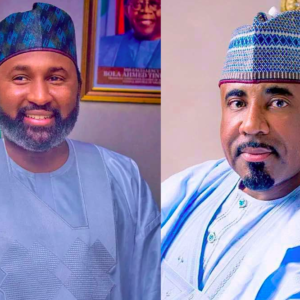
Engr Mustapha Gubio biography — explore the life, career, family, and political rise of Borno State’s foremost engineer and APC governorship candidate for 2027.
Table of Contents
Key Takeaways
- Engr Mustapha Gubio’s career path from engineer to top commissioner to governorship candidate mirrors almost exactly the trajectory of Governor Zulum himself — a deliberate parallel that Zulum has publicly noted.
- His work in post-conflict reconstruction made him one of the most practically experienced public servants in northeastern Nigeria.
- He was the first aspirant to obtain the APC governorship nomination form in Borno State for the 2027 cycle — a strategic early-mover advantage.
- His emergence as APC consensus candidate came swiftly, with endorsements from multiple stakeholder groups reflecting a broad coalition of support.
- His FNSE designation places him among the most formally qualified engineers to have served in a senior ministerial role in Borno State.
Who Is Engr Mustapha Gubio?
In the complex and often turbulent world of northeastern Nigerian politics, few figures have emerged with as much quiet consistency and earned credibility as Engr Mustapha Gubio. A Fellow of the Nigerian Society of Engineers (FNSE), seasoned public administrator, and now the consensus governorship candidate of the All Progressives Congress (APC) for Borno State’s 2027 election, Gubio represents a particular kind of political figure — one whose ambitions are rooted not in rhetoric, but in a documented record of work on the ground.
His name became a household one across Borno State not through campaign rallies, but through roads built, homes constructed for displaced families, and communities restored in the aftermath of one of Nigeria’s most devastating insurgencies. As the state’s Commissioner for Reconstruction, Rehabilitation and Resettlement, and later as Commissioner for Works and Housing under Governor Babagana Umara Zulum, Gubio touched virtually every corner of Borno’s physical landscape.
By April 2026, he had formally entered the 2027 governorship race, becoming the first aspirant to obtain the APC’s nomination form in the state. He was quickly anointed by Governor Zulum as the preferred successor — a reflection of the trust that the governor, who himself rose from the position of commissioner to the governorship, placed in a man who had walked a strikingly similar path.
This biography presents a comprehensive and factual account of Engr Mustapha Gubio’s life, public service career, political emergence, and the legacy he is in the process of building for Borno State.
Quick Facts About Engr Mustapha Gubio
| Detail | Information |
|---|---|
| Full Name | Mustapha Gubio |
| Professional Title | Engineer (Engr); Fellow of the Nigerian Society of Engineers (FNSE) |
| Nationality | Nigerian |
| State of Origin | Borno State, Nigeria |
| Religion | Islam |
| Political Party | All Progressives Congress (APC) |
| Former Position 1 | Commissioner for Reconstruction, Rehabilitation & Resettlement, Borno State |
| Former Position 2 | Commissioner for Works and Housing, Borno State |
| Current Status | APC Governorship Candidate, Borno State (2027) |
| Nomination Form | Obtained April 2026 (₦50 million APC form) |
| Anointed By | Governor Babagana Umara Zulum |
| Consensus Candidate | Yes — adopted as APC consensus candidate, May 2026 |
| Professional Membership | Fellow, Nigerian Society of Engineers (FNSE) |
| Key Mandate Areas | Infrastructure, post-conflict reconstruction, housing |
Early Life & Background: Roots in Borno’s Northeastern Heartland
Engr Mustapha Gubio hails from Borno State in northeastern Nigeria — a region that carries both an extraordinary cultural heritage and the weight of decades of socio-political challenges. His surname, Gubio, is shared with a Local Government Area of Borno State, suggesting deep ancestral ties to that part of the state. Gubio LGA, located roughly 60 miles from Maiduguri, the state capital, is a semi-arid landscape in the heart of Nigeria’s Lake Chad basin region — a place where resilience is not a slogan, but a way of life.
Borno State is historically one of the most significant in Nigeria, home to the ancient Borno Empire, which ruled parts of the Chad Basin for over a thousand years. Growing up in this environment instills a particular sense of history and communal responsibility. For Mustapha Gubio, that upbringing appears to have shaped a disposition toward service, structure, and practical problem-solving — qualities that would define every stage of his professional life.
While detailed information about his parents, siblings, and early childhood schooling has not been made publicly available — a discretion common among many public servants in Nigeria — what is clear from his later career is that he emerged from a background that valued education, professional excellence, and community commitment. These values would propel him through an engineering education and into decades of impactful public service.
Education: Building a Foundation in Engineering
Engr Mustapha Gubio pursued a formal education in engineering, ultimately attaining the prestigious designation of Fellow of the Nigerian Society of Engineers (FNSE). The FNSE designation is among the highest professional honors in Nigeria’s engineering sector, awarded only to engineers who have demonstrated sustained excellence, leadership, and contribution to the profession over many years. It is not a credential given lightly, and its presence on Gubio’s profile speaks volumes about the seriousness with which he approached his technical career.
Engineering education in Nigeria — particularly in the northeast — requires considerable dedication. The field demands rigorous training in applied sciences, project design, materials, and construction management. Gubio’s eventual specialization in civil and works-related engineering equipped him with the exact skill set that would later define his ministerial roles: an ability to conceptualize large-scale infrastructure, manage complex logistics, and see difficult projects through to completion in challenging environments.
Beyond formal credentials, Gubio’s career demonstrates the kind of practical, field-tested expertise that is often more meaningful than academic achievement alone. His work across Borno State — in conditions made vastly more difficult by active insurgency, displaced populations, and damaged supply chains — reflects an engineer who did not simply plan projects from an office, but engaged with the reality of what rebuilding a war-affected state actually required.
Career Journey: From Engineering to the Corridors of Governance
Early Career: The Making of a Technical Expert
Before entering public service, Engr Mustapha Gubio built a career as a professional engineer. The specifics of his early private-sector work have not been extensively documented in public records, but his later appointments to some of Borno State’s most demanding technical positions confirm that by the time he entered government, he had accumulated years of engineering experience that qualified him for leadership roles.
His career trajectory reflects a pattern common among Nigeria’s most capable public servants: professional excellence in a technical field, followed by recognition by political leadership, and then appointment to a position where that expertise could serve the public interest directly.
First Ministerial Role: Commissioner for Reconstruction, Rehabilitation and Resettlement
Engr Mustapha Gubio first rose to national and regional attention in his role as Borno State’s Commissioner for Reconstruction, Rehabilitation and Resettlement (RRR). This was arguably the most demanding ministerial position in the state at the time of his appointment.
Borno State has been at the epicenter of Nigeria’s Boko Haram insurgency since 2009. Entire towns and villages were sacked, schools and hospitals burned, farmlands abandoned, and millions of people displaced into camps or across international borders. The scale of destruction was — and in many parts of the state, remains — staggering.
As the Commissioner for RRR, Gubio took responsibility for leading the state government’s efforts to reverse this destruction. His mandate covered conflict-affected areas across the state, including Bama, Konduga, Damasak, and Mafa Local Government Areas. These were not peripheral communities — Bama, for instance, was once the second-largest town in Borno before Boko Haram devastated it.
His work in this role involved the restoration of schools, healthcare facilities, roads, water infrastructure, and other essential services in communities returning from years of abandonment and violent conflict. The complexity of such work cannot be overstated. Logistics alone — moving materials, workers, and equipment into areas that had only recently seen active fighting — required both technical mastery and strategic coordination with security agencies.
Commissioner for Works and Housing: Building a Modern Borno
Following his tenure in the RRR role, Gubio was appointed as Borno State’s Commissioner for Works and Housing, a position that placed him at the center of the state’s broader physical development agenda. This shift from reconstruction to proactive infrastructure development marked the next chapter of his public service career.
In this capacity, Gubio oversaw critical infrastructure development across both metropolitan and rural communities, with particular emphasis on housing. Housing development in Borno State carries deep humanitarian significance. With millions of internally displaced persons (IDPs) and returnees seeking shelter, the construction of homes is not merely a development metric — it is a lifeline. Gubio’s management of this mandate contributed materially to improving living conditions for communities that had known nothing but instability for years.
He also oversaw the development and rehabilitation of roads, bridges, and government facilities — the connective tissue of any functioning state. His attention to both urban and rural infrastructure ensured that development was not concentrated only in Maiduguri, but reached outlying communities that had often been neglected even before the insurgency.
The Borno State Ministry of Works and Housing under Gubio’s leadership was guided by principles of quality, durability, and accountability — values that aligned closely with Governor Zulum’s broader governance philosophy and that have been repeatedly cited by political stakeholders as evidence of Gubio’s fitness for higher office.
Career Timeline & Major Milestones
| Period | Role / Milestone |
|---|---|
| Pre-Government | Built career as a professional engineer; attained FNSE designation |
| Zulum Administration (from 2019) | Appointed Commissioner for Reconstruction, Rehabilitation & Resettlement (RRR), Borno State |
| RRR Tenure | Led reconstruction of Bama, Konduga, Damasak, and Mafa LGAs; restored schools, hospitals, and essential services |
| Later Appointment | Appointed Commissioner for Works and Housing, Borno State |
| Works & Housing Tenure | Oversaw infrastructure and housing development across metropolitan and rural Borno; improved living conditions for IDPs and returnees |
| March 30, 2026 | Resigned from cabinet following Governor Zulum’s dissolution of the State Executive Council ahead of 2027 elections |
| April 3, 2026 | Completed handover of Ministry affairs to the Permanent Secretary |
| April 2026 | Obtained APC’s ₦50 million governorship nomination and expression of interest forms in Abuja — first aspirant in the state to do so |
| April 28–29, 2026 | Received Governor Zulum’s public anointment as preferred successor at presentation ceremony in Maiduguri and Abuja |
| Late April 2026 | Received endorsements from the Forum of Special Advisers (38 Special Advisers across 27 LGAs) and Southern Borno Youth Advancement Initiative (SOBYAI) |
| May 2026 | Formally adopted as APC consensus governorship candidate; presented by Governor Zulum to Vice President Kashim Shettima at the Presidential Villa, Abuja |
Major Achievements & Contributions: Rebuilding Borno Brick by Brick
Engr Mustapha Gubio’s achievements are best understood not through statistics, but through the human stories embedded in them. In a state where insurgency displaced more than two million people at its peak, every school rebuilt, every road reconnected, and every house completed for a returning family represents an accomplishment that goes far beyond engineering.
His most significant contribution during the RRR period was the systematic restoration of public infrastructure in areas that had been completely abandoned. Areas like Bama and Konduga became symbols of recovery under his watch — communities where the lights came back on, where children returned to classrooms, and where primary health centers resumed serving residents who had gone years without medical care.
In his Works and Housing role, his most visible achievements came in the domain of housing provision for both urban communities and resettled IDP populations. Housing construction in conflict-affected areas requires careful coordination with security agencies, community leaders, and international organizations — a multi-stakeholder environment in which Gubio demonstrated consistent competence.
His broader contribution to Borno State’s governance framework lies in his role in helping to institutionalize a culture of accountability and delivery within the state’s technical ministries. Under the Zulum administration, ministries were expected to show results — and Gubio’s record reflects a minister who met that expectation consistently, earning the governor’s trust and, eventually, his public endorsement.
Political Rise: The Road to the 2027 Governorship
Resignation and Declaration
The political chapter of Engr Mustapha Gubio’s public life began in earnest in March 2026, when Governor Zulum dissolved the Borno State Executive Council and directed all commissioners to hand over their responsibilities ahead of the 2027 election season. Gubio, alongside other ministerial colleagues, completed the handover of the Ministry of Works and Housing to the Permanent Secretary by April 3, 2026.
His next move was swift and decisive. Within weeks of leaving office, he formally entered the 2027 governorship race by obtaining the APC’s nomination and expression of interest forms in Abuja — at a cost of ₦50 million. He was accompanied in Abuja by Senator Mohammed Tahir Monguno, who represents Borno North, and by other senior APC figures including the member representing the Monguno, Nganzai, and Marte constituency, Hon. Bukar Talba. His was the first governorship nomination form issued in Borno State, giving him both a first-mover advantage and a powerful symbolic position in the emerging race.
The Governor’s Anointment
Governor Zulum’s public backing of Gubio came in late April 2026, when he presented Gubio with his APC forms at a well-attended ceremony in Maiduguri, later formalized in Abuja. In explaining his choice, Zulum drew an explicit comparison between Gubio’s career trajectory and his own — noting that just as he himself had risen from the commissioner role to the governorship, Gubio had demonstrated the same discipline, commitment, and operational competence in a comparable ministerial role.
The governor was emphatic about the qualities that made Gubio his preferred choice: exceptional capacity in overseeing critical infrastructure, a proven commitment to post-conflict rebuilding, and the administrative discipline required to carry an entire state’s development agenda forward.
In a nuanced but widely reported distinction, Zulum described his gesture as an “anointment” rather than a formal endorsement, clarifying that the act of receiving an aspirant’s forms is a long-standing political tradition in Borno — a blessing offered to those who seek office, not a unilateral imposition of a candidate. Nonetheless, the political significance of his backing was unmistakable, and the broader APC establishment swiftly aligned behind Gubio.
Consensus Candidate
By May 2026, Borno State’s APC stakeholders had formally adopted Gubio as the party’s consensus governorship candidate. Governor Zulum presented him to Vice President Kashim Shettima at the Presidential Villa in Abuja — a powerful symbol of federal-level recognition for Gubio’s candidacy. The presentation brought together a wide array of political heavyweights: former Governor Senator Maina Ma’aji Lawan, Deputy Governor Umar Usman Kadafur, APC Deputy National Chairman Ali Bukar Dalori, and multiple senators and federal lawmakers from the state.
The emergence of a consensus candidate — with Senator Kaka Shehu Lawan stepping aside from the governorship race to focus on retaining his senatorial seat — reflected the APC’s desire for unity heading into what promises to be a consequential election cycle.
Endorsements from Stakeholder Groups
Beyond the party machinery, Gubio’s candidacy attracted endorsements from a diverse array of civil society and political stakeholder groups. The Forum of Special Advisers to Governor Zulum — comprising 38 Special Advisers drawn from all 27 local government areas of Borno State — unanimously endorsed him in a joint statement, describing his record as one of “competence, loyalty, and commitment to development.”
The Southern Borno Youth Advancement Initiative (SOBYAI) also formally backed his candidacy, citing his track record in executing complex infrastructure projects, his administrative discipline, his understanding of Borno’s security architecture, and his capacity for peacebuilding. In their endorsement statement, the group described him as “a builder, a stabilizer, and a leader for these trying times.”
Personal Life: A Private Man in a Public Role
Engr Mustapha Gubio is known to maintain a deliberately private personal life — a choice that is consistent with his broader professional character as someone who lets his work speak louder than his words. Detailed information about his family, spouse, or children has not been made available in public sources, reflecting a boundary between his public role and his personal world that he appears to guard with the same discipline he brings to governance.
What is evident from his public engagements is a man of measured temperament: formal in his professional conduct, committed to the structures and institutions he has served, and capable of operating within complex political environments without losing sight of the technical and administrative responsibilities that first defined his career.
His roots in Borno State give him an intrinsic understanding of the communities he has spent his career serving — not as an outsider arriving with theories about development, but as someone who shares the culture, history, and lived experiences of the people of northeastern Nigeria.
Net Worth & Financial Profile
Engr Mustapha Gubio’s personal net worth has not been publicly disclosed, and no verified financial figures have been made available in the public domain. As a long-serving public official and a Fellow of the Nigerian Society of Engineers, his financial profile would reflect both his professional earnings over a career that spans private engineering practice and senior government roles, as well as the financial obligations of his ongoing political campaign.
It is worth noting that obtaining the APC’s governorship nomination and expression of interest forms alone cost ₦50 million — a significant threshold that signals the seriousness of his political investment heading into 2027.
As with most Nigerian public officials, his net worth remains a matter of speculation rather than public record, and any figures circulating in informal circles should be treated with appropriate caution in the absence of official disclosure.
Legacy, Influence & Impact on Borno State’s Development
The legacy that Engr Mustapha Gubio is building is still a work in progress — but its outlines are already visible in the rebuilt schools of Bama, the housing estates that returned displaced families to their communities, and the roads that reconnected isolated villages to Maiduguri’s economic pulse.
His influence on northeastern Nigeria’s development discourse lies in the example he sets: that technical expertise, applied rigorously and with genuine compassion for those being served, can transform even the most war-damaged environments. He has demonstrated that engineering and governance are not separate disciplines — that the best governors of states with complex physical development needs are often those who understand, at a technical level, what it takes to build and rebuild a community.
As a governorship candidate, his most significant potential legacy would be the continuation and acceleration of Borno State’s post-conflict recovery — a project that remains unfinished and that requires the kind of leadership that can sustain focus across a full gubernatorial term.
Engr. Gubio is a distinguished engineer and public servant whose career reflects a rare blend of technical competence, administrative acumen, and genuine compassion for the people of Borno — a characterization offered by his supporters that resonates widely with those who have watched his career from the inside.
Awards & Recognitions
Engr Mustapha Gubio holds the designation of Fellow of the Nigerian Society of Engineers (FNSE) — the highest professional honor in Nigeria’s engineering community. This recognition reflects not just academic achievement, but sustained, demonstrable contribution to the engineering profession and to Nigeria’s development through engineering practice.
Beyond this professional honor, his recognitions have come primarily through the trust and endorsements of Borno State’s political and civil society ecosystem — from the Governor’s public anointment to the unanimous backing of the Forum of Special Advisers and the endorsements of youth and community groups across the state. In Nigerian governance culture, particularly in the northeast, these forms of communal and institutional recognition carry significant weight and speak to a public servant’s standing among those who have watched his work most closely.
His appointment to two of Borno State’s most demanding ministerial roles — under a governor known for his exacting standards and accountability expectations — is itself a form of recognition that reflects the institutional confidence placed in his abilities.
Controversies & Challenges: Navigating Politics in a Complex State
No account of Engr Mustapha Gubio’s political emergence would be complete without acknowledging the nuanced political dynamics that surrounded his anointment as a governorship candidate.
The most widely reported point of contention involved the distinction between “anointment” and “endorsement.” When Governor Zulum publicly presented Gubio with his APC nomination forms and backed his candidacy, some political observers and media organizations reported it as a full endorsement. Zulum’s office subsequently issued a clarification, describing the gesture as part of a “routine tradition of responsible leaders to bless and offer prayers” for aspirants — an anointing, not a formal party-level endorsement.
Political scientists weighed in, noting that while the two concepts often overlap, they carry different implications within Nigeria’s democratic framework. The distinction, while technical, matters because it speaks to the nature of political succession and the internal democracy of the APC within Borno State.
Additionally, the initial framing of the process — with Gubio as a lone candidate endorsed before a broader primary process — raised questions about internal party competition. These were largely resolved by the emergence of a consensus framework and the stepping aside of other aspirants, including Senator Kaka Shehu Lawan, who vacated the governorship race to focus on his senatorial seat.
Working in Borno State’s public service also presents its own ongoing challenge: delivering development results in a security environment that, while significantly improved under Zulum, continues to present threats from remnants of insurgent groups. Gubio’s record in this environment speaks to an individual who has consistently prioritized results over comfort — a quality that those who back his candidacy point to as essential for the next phase of the state’s governance.
Philanthropy & Community Engagement
While Engr Mustapha Gubio has not been publicly associated with a personal foundation or structured philanthropic organization, his entire ministerial career can be understood as an extended act of public service with profoundly humanitarian dimensions.
The reconstruction work he led in communities like Bama, Konduga, Damasak, and Mafa — restoring schools, healthcare facilities, and essential services to populations that had lived through brutal insurgent occupation — represents a form of practical philanthropy that goes beyond charitable donations. It is the kind of service that materially changes and, in some cases, saves lives.
His work in housing provision for internally displaced persons similarly reflects a commitment to the welfare of Borno’s most vulnerable citizens. The construction of homes for IDPs and returnees is not simply a housing policy — it is the restoration of dignity, stability, and family life to people who lost everything to conflict.
As he transitions into the political arena, observers expect that his community engagement approach will evolve into more formalized platforms — particularly if he assumes the governorship — but his record of service already speaks to a man for whom public welfare has been a consistent professional priority.
Interesting Facts About Engr Mustapha Gubio
- He mirrors Governor Zulum’s career path. Just as Zulum rose from Commissioner for Reconstruction, Rehabilitation and Resettlement to the governorship, Gubio served in an equivalent commissioner role before pursuing the governorship — a parallel that Zulum himself drew when explaining his anointment.
- He was the first aspirant in Borno to obtain the APC’s 2027 governorship nomination form. This early-mover positioning gave him a strategic advantage and signaled serious, organized intent from the start of the race.
- His FNSE designation is rare among Nigerian commissioners. Being a Fellow of the Nigerian Society of Engineers while serving as a state minister reflects an unusually high level of professional distinction within the political environment.
- He paid ₦50 million for his APC nomination form. This figure underscores both the financial scale of Nigerian politics and the depth of his commitment to the governorship race.
- He received unanimous endorsement from 38 Special Advisers spanning all 27 LGAs. The geographic breadth of this backing reflects a candidate with state-wide, not merely regional, appeal within the APC structure.
- He was formally presented to Vice President Kashim Shettima at the Presidential Villa, Abuja, as the consensus APC candidate — a meeting that signaled federal-level recognition and political alignment with the presidency.
- His surname is shared with a Borno State LGA. Gubio LGA, located about 60 miles from Maiduguri, has ancestral significance that ties him deeply to the land and people he seeks to govern.
- His candidacy brought to rest a reported political fracas between Governor Zulum and Vice President Shettima over Borno’s succession — with his emergence as consensus candidate described as the resolution of that tension.
Conclusion: An Engineer Poised to Govern
Engr Mustapha Gubio’s story is, at its heart, a story about the quiet power of competence. In a political landscape that often rewards rhetoric over results, he has built his public reputation on something far more durable: a documented track record of getting difficult things done in one of Nigeria’s most challenging governance environments.
He rebuilt communities that insurgency had reduced to rubble. He constructed housing for families who had spent years in displacement camps. He managed ministries that required not just administrative oversight, but genuine technical understanding of what was being built, how, and why. Through it all, he conducted himself with the discipline and accountability that earned him the trust of a governor known for holding his officials to high standards.
His emergence as Borno State’s APC consensus governorship candidate for 2027 reflects a political moment of genuine significance — not just for his own career, but for the broader question of what kind of leadership Borno State will need to complete its post-conflict recovery and move into a new era of sustainable development.
As the 2027 election cycle unfolds, Engr Mustapha Gubio carries with him the weight of a mandate built not on promises, but on years of proven performance. Whether he wins the governorship or not, his legacy as a builder of post-conflict Borno is already secured — one road, one school, and one home at a time.
Frequently Asked Questions (FAQs)
Q1: Who is Engr Mustapha Gubio? He is a Nigerian professional engineer (FNSE), former Borno State Commissioner for Reconstruction, Rehabilitation and Resettlement, former Commissioner for Works and Housing, and the APC’s consensus governorship candidate for Borno State in the 2027 elections.
Q2: What positions did Mustapha Gubio hold in the Borno State government? He served as Commissioner for Reconstruction, Rehabilitation and Resettlement, and later as Commissioner for Works and Housing under Governor Babagana Umara Zulum.
Q3: Why did Governor Zulum anoint Gubio as his preferred successor? Zulum cited Gubio’s discipline, administrative competence, and exceptional performance in overseeing infrastructure and post-conflict reconstruction — qualities he said mirror his own path from commissioner to governor.
Q4: What does FNSE mean after Mustapha Gubio’s name? FNSE stands for Fellow of the Nigerian Society of Engineers — the highest professional honor in Nigeria’s engineering community, awarded for sustained excellence and leadership in the field.
Q5: What areas of Borno did Gubio’s reconstruction work cover? His reconstruction efforts focused on conflict-affected communities including Bama, Konduga, Damasak, and Mafa Local Government Areas, where he led the restoration of schools, healthcare facilities, and essential public services.
Q6: Is Mustapha Gubio the APC’s consensus governorship candidate for Borno 2027? Yes. By May 2026, APC stakeholders in Borno State formally adopted him as the consensus candidate, following which Governor Zulum presented him to Vice President Kashim Shettima at the Presidential Villa in Abuja.
Q7: How much did Mustapha Gubio pay for his APC governorship nomination form? He obtained the APC’s nomination and expression of interest forms at a combined cost of ₦50 million, as reported by multiple Nigerian media outlets in April 2026.
Q8: What is Engr Mustapha Gubio’s net worth? His personal net worth has not been publicly disclosed. No verified figures are available, and any estimates in circulation should be treated with caution in the absence of an official declaration.
This biography is written for informational purposes. All facts are based on publicly available and verifiable information from reputable Nigerian news sources. The author makes no claim to exhaustive knowledge of all aspects of the subject’s life.