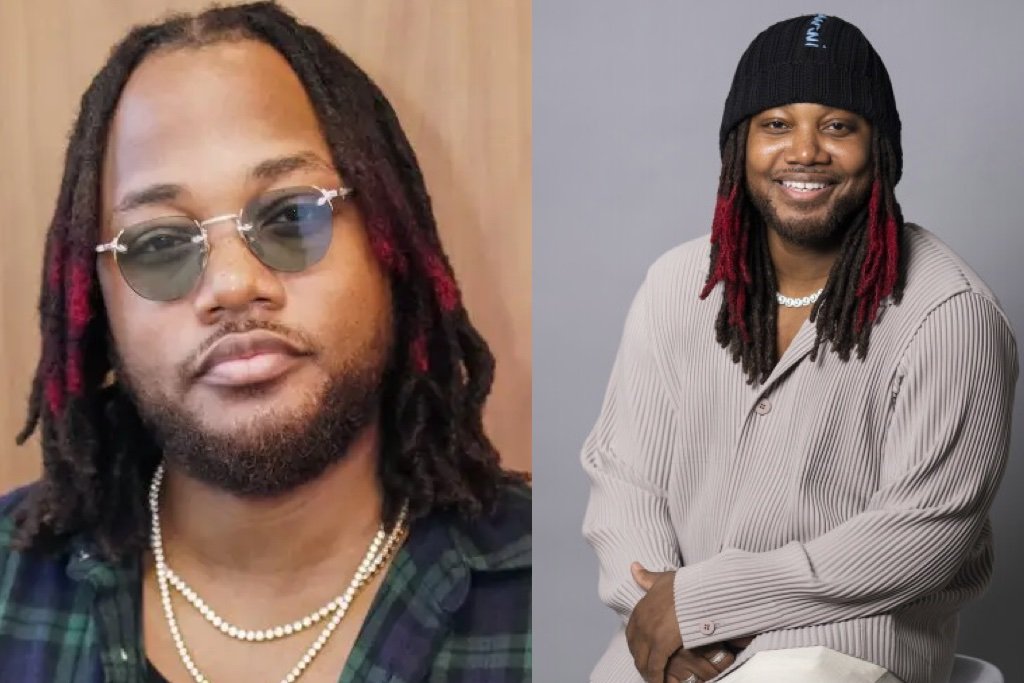
How the Nickelodeon “Victorious” child star reinvented himself as a Grammy-winning R&B force, writing hits for SZA and Drake before “Mutt” made him a star in his own right.
From sidekick to top dog
For most of a decade, Leon Thomas was the guy behind the hits other people sang. He co-produced SZA’s “Snooze,” wrote for Drake, Post Malone and Rick Ross, and was best known to a generation as André, the musical sidekick on Nickelodeon’s Victorious. Then, in his thirties, he stopped feeding other people’s careers and built his own — and at the 2026 Grammys, his album Mutt won Best R&B Album while he collected two trophies on the night and six total nominations, the third-most of any artist that year.
The arc is what makes Thomas compelling. Child stars who try to relaunch as serious adult artists usually fail, and producers who step out front rarely command respect as performers. Thomas did both at once, and the win wasn’t a fluke of timing — Mutt became the first sophomore album by a solo male artist to take Best R&B Album since D’Angelo’s Voodoo in 2001. That’s the company he’s now keeping.
Quick facts
| Full name | Leon George Thomas III |
| Born | August 1, 1993, Brooklyn, New York |
| Age | 32 |
| Roles | Singer, songwriter, producer, actor |
| Best known for (acting) | André Harris on Victorious (2010–2013) |
| Label | EZMNY Records / Motown |
| Debut album | Electric Dusk (2023) |
| Breakthrough album | Mutt (September 27, 2024) |
| 2026 Grammys | 6 nominations; won Best R&B Album and Best Traditional R&B Performance |
| Total Grammys | 3 |
| Notable credits | SZA’s “Snooze,” plus work for Drake, Ariana Grande, Babyface, Toni Braxton |
A Brooklyn kid raised on Broadway stages
Thomas was born August 1, 1993, in Brooklyn, and music was effectively the family business. His mother was a jazz vocalist, his grandfather an opera singer who appeared on Broadway, and his stepfather played guitar for B.B. King. That lineage matters because it explains the unusual musical literacy underneath his work — this wasn’t a kid who stumbled into the industry, but one raised inside it.
He started performing at 10, making his Broadway debut as Young Simba in The Lion King in 2003. More Broadway followed: Caroline, or Change in 2004 and The Color Purple. He sang “La Bamba” alongside Robin Williams and Terrence Howard in the 2007 film August Rush, and voiced characters on Nick Jr. shows. Notably, he kept attending public school in Brooklyn through much of this, a grounding he credits for keeping him steady. “I had a great childhood. My mom made sure that I had a good group of friends,” he told The Breakfast Club. “I feel like having that grounded energy was definitely important for even me as a songwriter.”
The Victorious years and the trap of child stardom
From 2010 to 2013, Thomas played André Harris on Nickelodeon’s Victorious, the role that made him recognizable to millions of Gen Z viewers — and, in a sense, the role he’s spent his adult career escaping. The show co-starred Ariana Grande, with whom he’d later collaborate musically, and cemented him as a teen-TV figure at exactly the age when that label becomes hardest to shed.
This is the crux of his story. Victorious gave him a platform but also a ceiling, the same trap that has stalled countless child actors. Thomas has been candid that the transition out was brutal. “It was a tough journey getting into music out of Nickelodeon during my twenties,” he told Essence around Mutt‘s release, “but now, in my thirties, I’m showing people that I know what I’m doing.” The 15-year gap between Victorious premiering and his 2026 Grammy breakthrough is the real measure of how long that reinvention took.
The decade he spent building everyone else’s hits
What separates Thomas from a typical actor-turned-singer is that he didn’t sit idle waiting for a solo break — he became one of R&B’s most respected behind-the-scenes craftsmen first. Working in part through the production duo the Rascals, he amassed writing and production credits for Drake, Rick Ross, Post Malone, Jack Harlow, Babyface, Toni Braxton, his old co-star Ariana Grande, and SZA.
The crowning credit was SZA’s “Snooze,” which he co-produced and which won the Grammy for Best R&B Song in 2024 — his first Grammy came not as a star but as a contributor. That distinction is important: by the time Mutt arrived, Thomas had already earned the industry’s respect as a songwriter and producer. His solo stardom wasn’t a hopeful gamble; it was the public catching up to a reputation peers already knew. As HuffPost framed it, he had quietly become “a top dog in R&B.”
Mutt: the album that changed everything
Thomas signed to Ty Dolla $ign’s EZMNY Records (a joint venture with Motown) in 2022 as the imprint’s first artist, releasing his debut Electric Dusk in 2023. But it was his sophomore album, Mutt, released September 27, 2024, that broke him through. Tellingly, he had only about a month to promote it — “I didn’t have a lot of time,” he told HuffPost — yet it became one of the biggest R&B projects of its year anyway.
Mutt works because it refuses to stay in one lane. The 14-track project pulls from jazz, neo-soul and rock, drawing on influences as far apart as Art Blakey and Miles Davis on one end and Black Sabbath and Led Zeppelin on the other — Billboard noted his “recent obsession” with Sabbath’s Paranoid. That breadth reflects his Broadway-and-jazz upbringing and his producer’s ear for arrangement. The title track gave him his first Hot 100 top 10 as a performer, peaking at No. 10.
A historic night at the 2026 Grammys
Thomas entered the 68th Grammy Awards as the most-nominated R&B artist of the year with six nods, including the two biggest general-field categories: Album of the Year and Best New Artist. The Best New Artist nomination carried a poetic irony — it came 15 years after Victorious first made him famous, a reminder of how non-linear his path had been.
He won Best Traditional R&B Performance for “Vibes Don’t Lie” and, more significantly, Best R&B Album for Mutt. The latter was genuinely historic: the first sophomore album by a solo male artist to win the category since D’Angelo’s Voodoo in 2001, and among solo artists overall, the first sophomore LP to win it since Alicia Keys’ The Diary of Alicia Keys in 2005. When “Vibes Don’t Lie” was called, Thomas wasn’t in the room — he was rehearsing his telecast performance, so his mother accepted on his behalf. “He worked so hard on this album,” she told the audience. The wins brought his career total to three Grammys.
What comes next
Thomas isn’t slowing to enjoy it. He’s teased a follow-up album, released a funk-forward EP titled PHOLKS, made his late-night debut on The Late Show With Stephen Colbert, and won Best New Artist at the BET Awards during the same breakthrough run. Interestingly, he’s also signalled a return to his first craft — telling GRAMMY.com he wants to “shake off the cobwebs” and get back into acting class after years of ignoring audition tapes to focus on building albums.
Conclusion
Leon Thomas’ career is a study in patience and craft over hype. The Broadway training, the years writing hits for bigger names, the slow climb out of the child-star box — none of it was fast, and that’s precisely why Mutt landed as something earned rather than manufactured. He spent a decade proving he understood how great records are built before asking audiences to accept him as the one singing them.
The open question now is whether he can sustain it without the underdog narrative that powered his breakthrough. He’s no longer the overlooked producer or the Victorious kid trying to be taken seriously — he’s a Grammy-winning headliner with expectations attached. But an artist who pulls from Miles Davis and Black Sabbath in equal measure, and who waited until his thirties to feel ready, seems unlikely to run out of ideas. For Leon Thomas, the long road out of Nickelodeon turned out to be the thing that made him.