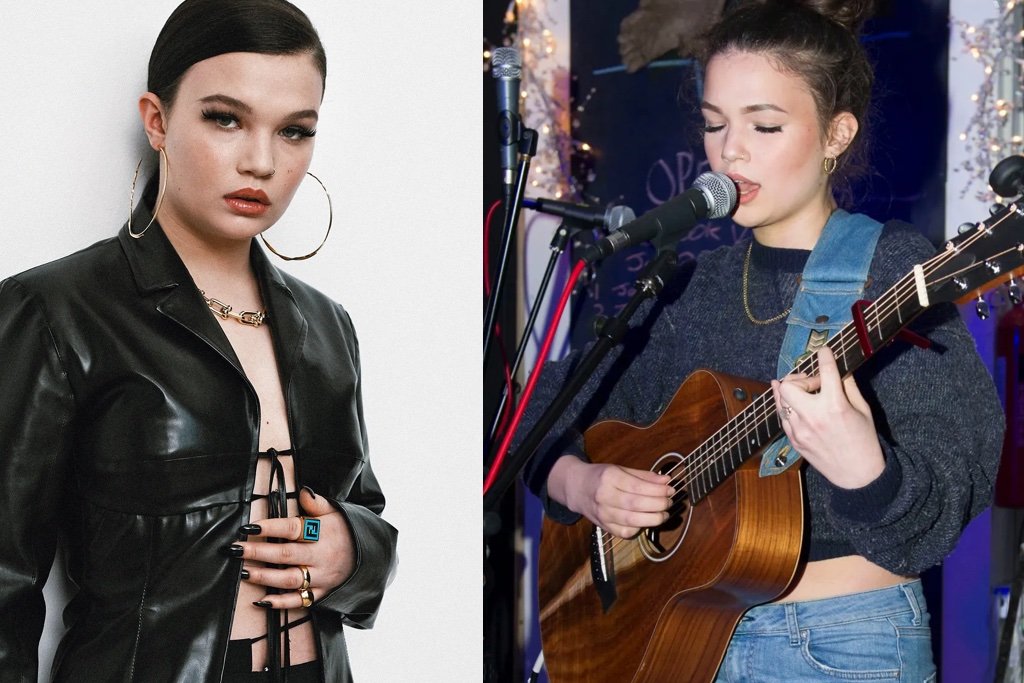
How South London’s Lola Young turned the viral hit “Messy” into a Grammy — and came back from an onstage collapse and rehab to win it four months later.
The comeback inside the breakthrough
Lola Young’s 2026 Grammy win for “Messy” looks, on paper, like a tidy success story: viral TikTok hit, UK number one, Best Pop Solo Performance beating Sabrina Carpenter, Lady Gaga and Chappell Roan. But the more honest version is messier, which is fitting. Four months before she stood at the Grammy podium, Young had collapsed onstage at a festival and stepped away from performing entirely. The award wasn’t just a coronation — it was a comeback, and that’s what makes her story worth telling rather than just summarizing.
The other thing that separates Young from the wave of TikTok-broken pop stars is that she isn’t really a TikTok product at all. She’s a BRIT School-trained songwriter who’d been releasing albums and earning industry tips for years before “Messy” caught fire. The virality found a fully formed artist, not the other way around — and the rawness people loved in the song turned out to be inseparable from the personal turbulence behind it.
Quick facts
| Name | Lola Young |
| Born | January 4, 2001, London (raised in Beckenham, Greater London) |
| Age | 25 |
| Education | The BRIT School |
| Label | Island Records |
| Breakout single | “Messy” (May 30, 2024) |
| Key albums | My Mind Wanders and Sometimes Leaves Completely (2023), This Wasn’t Meant for You Anyway (2024) |
| 2026 Grammys | Won Best Pop Solo Performance (“Messy”); nominated for Best New Artist |
| 2026 BRIT Awards | Five nominations |
| Often compared to | Amy Winehouse |
A South London songwriter, trained young
Young was born on January 4, 2001, and grew up in the Beckenham area of South London. She began writing songs as a child and attended the BRIT School, the famed Croydon performing-arts institution whose alumni include Adele and Amy Winehouse — the latter a comparison critics reach for often, given Young’s raspy, soul-inflected voice and unvarnished lyrics.
That training matters to understanding her. Young didn’t appear from nowhere; she came up through a system designed to develop serious musicians, and the industry noticed early. She landed on the BBC Sound of 2022 longlist alongside future stars like Wet Leg and Tems, and was a 2021 BRIT Awards Rising Star nominee. She released two full-length albums — My Mind Wanders and Sometimes Leaves Completely in 2023 and This Wasn’t Meant for You Anyway in 2024 — before most listeners had heard her name. By the time “Messy” hit, she had years of work behind her.
How “Messy” took over the world
“Messy” was released on May 30, 2024, as the sixth single from This Wasn’t Meant for You Anyway. It wasn’t built to go viral; it simply did, becoming TikTok’s unofficial soundtrack across 2024 and into 2025. It was her first charting song, and it went all the way to No. 1 on the UK Singles Chart, topping the charts in Australia, Belgium, Croatia, Ireland and Israel too. It ended up the most-downloaded track in the UK in 2025.
The song’s appeal is its blunt relatability — a self-aware anthem about being a contradictory, imperfect mess, delivered in Young’s glottal South London accent. By the time it broke, her fans already expected that kind of vulnerable, all-too-real writing from her; “Messy” just delivered it to a global audience.
Young has been strikingly candid about how disorienting that level of success felt. “It’s funny, because you get to a moment where you go, ‘Oh, [expletive], like I’m kind of experiencing what I’ve been longing to experience for a while and it hits you in the face,'” she told the New York Times. “And then what?” That ambivalence — getting the dream and finding it overwhelming — would prove to be more than a passing feeling.
The collapse and the honest reckoning
In September 2025, Young collapsed onstage at the All Things Go festival, a frightening public moment that forced her to step back from performing. The break wasn’t a strategic pause; it was a genuine health crisis, and she has been unusually open about its roots in her struggles with mental health and addiction.
Speaking to The Guardian around that time about a recent stint in rehab, she didn’t soften it. “It’s been a struggle — I’ve definitely had to work on some internal healing while grappling with touring and stuff,” she said. “I’ve had to be away for a bit while battling with things. But it teaches you a lot, being addicted to substances. It makes you more empathetic about other people that have gone through that. It’s just a constant journey.”
She was equally clear-eyed with ELLE UK about the danger of sudden fame. “I never want to let the glitz and glamour take my head to a different place,” she said. “You can get swept away quickly — it’s terrifying.” That self-awareness — naming the trap rather than falling silently into it — is part of why her audience trusts her. The honesty in the interviews is the same honesty in the songs.
A Grammy win that doubled as a return
The 2026 Grammys, held February 1, became the symbolic close of that turbulent chapter. Young performed a stripped-down, piano-only version of “Messy” during the Best New Artist medley — one of the night’s most emotional moments, a deliberate contrast to the show’s bigger spectacles, with her raw, breakable voice carrying the arena. It was one of her first major appearances since the health break.
Then she won. “Messy” took Best Pop Solo Performance, beating a genuinely stacked field — Justin Bieber, Sabrina Carpenter, Lady Gaga and Chappell Roan. Young, by her own admission a “big mouth,” hadn’t prepared a speech for a win she didn’t expect, and an enthusiastic expletive slipped past the CBS censors. “Sorry, sorry, sorry! It’s messy, you know what I mean?” she said, freezing up and apologizing — a moment that landed as charmingly on-brand. She was also nominated for Best New Artist (which went to Olivia Dean) and arrived at the ceremony with five BRIT Award nominations to her name.
Rolling Stone captured the weight of it: this was a first Grammy arriving four months after she’d collapsed on a stage. Support had poured in during her recovery — she’s mentioned that Katy Perry messaged her and Charli XCX emailed. The win, in that context, read less like a trophy and more like proof she’d made it back.
Conclusion
Lola Young’s appeal is that the messiness is real. The song, the Grammy speech, the candid interviews about rehab and the terror of fame — they’re all the same person, and that coherence is rare. She isn’t a manufactured pop star performing vulnerability; she’s an artist whose actual struggles and actual gifts are difficult to separate, which is exactly what makes the work hit.
The question hanging over her is also the hopeful one: whether she can sustain a career at this altitude while protecting the health that the last two years nearly cost her. She’s named the danger out loud, which is more than most do, and she’s surrounded by an industry that clearly wants her to succeed. If she manages it, the BRIT School kid who spent years being tipped as “one to watch” — and who came back from a very public low to win on music’s biggest night — may turn out to be one of British pop’s most durable and honest voices. For now, the comeback itself is the achievement.
This article touches on addiction and mental health. If you or someone you know is struggling, support is available through local health services and dedicated helplines.