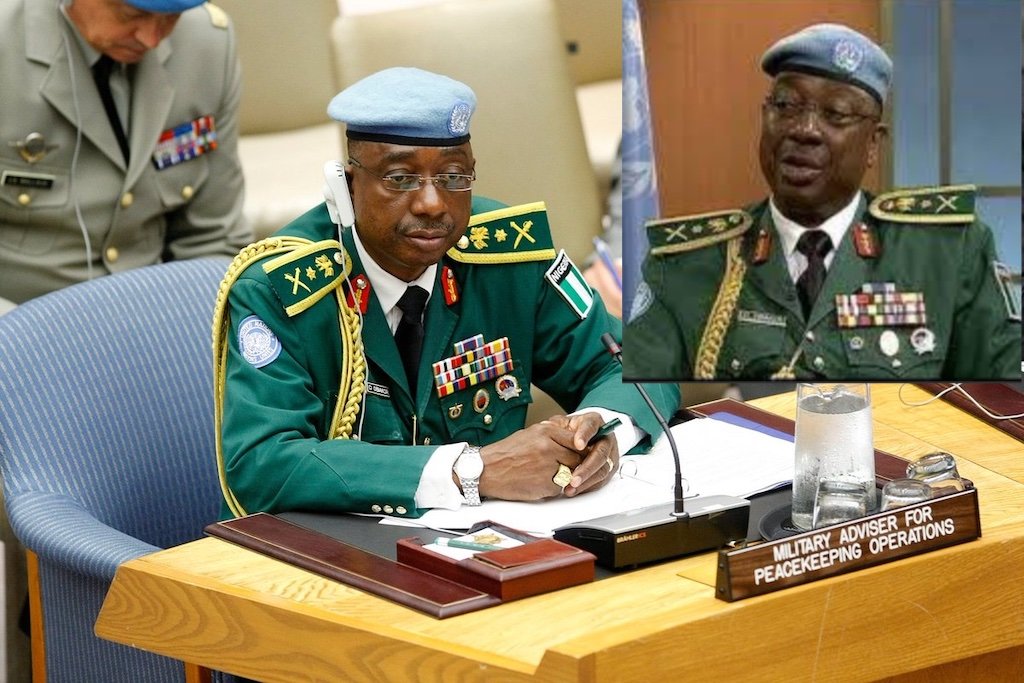
Nigeria lost one of its most distinguished military icons on Wednesday, May 27, 2026, when Lieutenant General Chikadibia Isaac Obiakor (retd.) passed away at an Abuja hospital at the age of 75. The announcement, made through a statement by Air Commodore Sani Zakari (rtd), confirmed the death of a man widely regarded as one of Africa’s most accomplished military peacekeepers and strategic commanders.
Born February 18, 1951, in Zaria, Kaduna State, Obiakor traced his roots to Awka South Local Government Area of Anambra State. His extraordinary 40-year military career, spanning from 1971 to 2011, took him from the dust and chaos of the Nigerian Civil War (where he fought on the Biafran side as a young man) to the marble corridors of the United Nations Headquarters in New York, where he became the first African to serve as UN Military Adviser for Peacekeeping Operations.
His passing represents the end of an era. Obiakor’s career embodied the complex history of post-independence Nigeria—a nation forged through war, peacekeeping missions, and the constant struggle for stability. From his teenage years at Government College Umuahia under Biafran leader Odumegwu Ojukwu’s orders, to commanding UN peacekeeping operations in Liberia, Obiakor witnessed and shaped some of Africa’s most pivotal moments.
Married to Mrs Meg Nnenna Obiakor for over 35 years and blessed with children, the highly decorated general accumulated honours including OFR (Officer of the Federal Republic), FSS, MSS, DSS, CMH, and the prestigious psc(+) designation. His 2018 strategic leadership biography titled “Rough Road to Peace” was unveiled by the National Defence College as part of its elite leadership study series.
Quick Facts: Lt Gen Chikadibia Obiakor (1951-2026)
| Category | Details |
|---|---|
| Full Name | Lt Gen Chikadibia Isaac Obiakor (rtd) |
| Date of Birth | February 18, 1951 |
| Place of Birth | Zaria, Northern Region, British Nigeria (now Kaduna State) |
| Date of Death | May 27, 2026 |
| Age at Death | 75 years old |
| Place of Death | Abuja hospital |
| State of Origin | Anambra State (Awka South LGA) |
| Father | Mr. Robert Echetebu Obiakor (railway fireman) |
| Mother | Mrs. Robert Echetebu Obiakor |
| Wife | Mrs. Meg Nnenna Obiakor (35+ years) |
| Children | Multiple (number undisclosed publicly) |
| Military Service | 1971-2011 (40 years) |
| Final Rank | Lieutenant General |
| NDA Course | Joined NDA in 1971 |
| UN Role | First African UN Military Adviser for Peacekeeping |
| UNMIL Service | Force Commander (2006-2008) |
| Honours | OFR, FSS, MSS, DSS, CMH, IG, QS, psc(+), GFISMN, NPOM |
| Biography Book | “Rough Road to Peace” (NDC, 2018) |
A Childhood Disrupted by Civil War
Chikadibia Isaac Obiakor entered the world in Zaria, Northern Nigeria, on February 18, 1951, into the family of Mr. and Mrs. Robert Echetebu Obiakor. His father worked initially as a fireman at the Nigerian Railway Corporation before joining the Federal Ministry of Works as an Artisan Grade I Engine Driver, Water Works, until his retirement in 1961.
This humble background—a working-class family in colonial Northern Nigeria—provided the foundation for what would become an extraordinary military career. Young Chikadibia attended the prestigious Nigerian Military School (NMS), Zaria, beginning his exposure to military discipline and culture from an early age.
The Biafran Disruption
Then came 1966. The pogroms targeting Igbos in Northern Nigeria forced thousands of families to flee back to the Eastern Region. Chikadibia and his family were among those displaced by ethnic violence.
The young military cadet’s life took a dramatic turn when Late Chief Odumegwu Ojukwu, then Military Governor of Eastern Region, issued orders that Igbo cadets like Obiakor should not return to the North. Instead, Ojukwu directed them to be deployed to government schools in the East where they had military cadet corps.
Obiakor found himself at Government College Umuahia, where he continued his education up till 1967. The school, located in present-day Abia State, was known for academic excellence and had produced many of Nigeria’s most prominent leaders.
Fighting in the Biafran War
When the Nigerian Civil War erupted in 1967, the 16-year-old Obiakor made the consequential decision to fight on the Biafran side. Despite his youth, he distinguished himself in combat and rose to the rank of captain during the brutal three-year conflict that claimed millions of lives.
This early experience of warfare—on the losing side, no less—shaped Obiakor’s understanding of military strategy, civilian suffering, and the complexities of African conflicts. The lessons learned during Biafra would later inform his approach to peacekeeping operations across the continent.
Reconciliation and Military Education
At the war’s end in 1970, Obiakor faced an uncertain future. Many former Biafran soldiers struggled to reintegrate into Nigerian society, with some facing prosecution or marginalization. However, Obiakor demonstrated remarkable resilience and strategic thinking.
He managed to re-establish contact with the Commandant of the Nigerian Military School, his former institution, navigating the delicate post-war political landscape. This connection proved invaluable.
Nigerian Defence Academy (1971)
In 1971, just one year after the civil war ended, Obiakor was admitted to the Nigerian Defence Academy (NDA)—the country’s premier military training institution. His admission, despite his Biafran service, reflected both his personal capabilities and Nigeria’s policy of reconciliation under General Yakubu Gowon’s “No Victor, No Vanquished” doctrine.
The NDA provided him with rigorous military training that would prepare him for the multifaceted challenges of his future career. His time at the academy laid the foundation for his commissioning into the Nigerian Army.
Commissioning and Early Career (1973)
Obiakor was officially commissioned into the Nigerian Army in 1973, beginning what would become a four-decade military career. The 1970s and 1980s were tumultuous periods in Nigerian military history, marked by multiple coups, counter-coups, and military governments.
As a young officer, Obiakor demonstrated exceptional capabilities that distinguished him from peers. He undertook various assignments across Nigeria, building experience in different aspects of military operations including artillery (which would later become his specialization).
Advanced Education and Strategic Studies
Throughout his career, Obiakor prioritized continuous education. He attended numerous military training institutions in Nigeria and abroad, building expertise that combined practical combat experience with theoretical military knowledge.
Most significantly, he graduated from the prestigious National Defence College (then known as the National War College) in Abuja, Nigeria’s highest military academic institution. This achievement marked him as part of the military intellectual elite—officers groomed for strategic leadership positions.
He subsequently earned a Master of Science degree in Strategic Studies from the University of Ibadan, one of Nigeria’s most respected academic institutions. This combination of military and civilian advanced education positioned him uniquely for both domestic command and international diplomatic roles.
Rise Through the Nigerian Army Ranks
Obiakor’s military career progression reflected steady achievement and demonstrated capabilities. Each appointment built upon previous experience while preparing him for greater responsibilities.
ECOMOG Service in Liberia (1996-1997)
A defining chapter of Obiakor’s career came with his service in the Economic Community of West African States Monitoring Group (ECOMOG) in Liberia. From 1996 to 1997, he served as the Commander of the ECOMOG Artillery Brigade, leading Nigerian and other West African forces working to restore peace in war-torn Liberia.
The Liberian intervention represented one of Africa’s most significant peacekeeping experiments—an attempt by African nations to resolve conflicts through regional cooperation rather than waiting for Western intervention. Obiakor’s command experience during this period would prove invaluable for his later UN roles.
In July 1997, he was appointed ECOMOG Chief Coordinator of the Liberian elections, overseeing the security arrangements for the country’s first post-civil war democratic exercise. The elections, which brought Charles Taylor to power, marked a critical transition in Liberian history.
General Officer Commanding, Second Mechanized Division
Following his Liberian service, Obiakor was appointed General Officer Commanding (GOC), Second Mechanized Division of the Nigerian Army, based in Ibadan, Oyo State. This prestigious command position placed him in charge of one of Nigeria’s most strategic military divisions.
The Second Mechanized Division has historically been responsible for security in Nigeria’s southwestern region, including critical areas of economic importance. As GOC, Obiakor was responsible for operational readiness, troop welfare, training, and engagement with civilian authorities in the region.
Chief of Administration, Nigerian Army
Obiakor’s next major appointment was as Chief of Administration of the Nigerian Army, placing him in charge of welfare, discipline, and medical services for all Nigerian military personnel. This position required extraordinary administrative capabilities and human resource management skills.
The role meant Obiakor was responsible for the wellbeing of hundreds of thousands of Nigerian soldiers and their families—a vast bureaucratic responsibility involving healthcare, housing, salaries, training, and disciplinary matters. His effective performance demonstrated capabilities beyond pure combat command.
Making History at the United Nations
Obiakor’s transition from Nigerian Army leadership to United Nations service represented a remarkable achievement and demonstrated his international standing.
UN Mission in Liberia (UNMIL) Force Commander
On December 5, 2005, then UN Secretary-General Kofi Annan named General Obiakor as the Force Commander of the United Nations Mission in Liberia (UNMIL). He officially assumed the position in January 2006, taking command of one of the UN’s largest and most complex peacekeeping operations.
As UNMIL Force Commander, Obiakor was responsible for over 15,000 international peacekeepers tasked with consolidating peace in Liberia following the country’s devastating civil wars. The mission involved disarming former combatants, training new security forces, supporting democratic governance, and protecting civilians.
His selection for this role wasn’t accidental. Obiakor’s ECOMOG experience in Liberia gave him unique understanding of the country’s complex political dynamics, ethnic tensions, and security challenges. He spoke the language of Liberian peace—both literally and figuratively.
First African UN Military Adviser
Obiakor’s most historic achievement came when he was appointed Military Adviser, Assistant Secretary General Office of Military Affairs, United Nations Department of Peacekeeping Operations (UNDPKO), at UN Headquarters in New York. This position made him the first African to serve as UN Military Adviser for Peacekeeping Operations.
In this role until 2010, Obiakor advised the UN Secretary-General on all military aspects of UN peacekeeping operations worldwide. He oversaw the military components of more than a dozen UN missions across Africa, Asia, Europe, and the Middle East.
The position required extraordinary diplomatic skills, strategic thinking, and political acumen. He briefed the UN Security Council on military matters, coordinated with troop-contributing countries, and developed military doctrine for complex peacekeeping operations.
Retirement from the Nigerian Army (2011)
After completing his UN service, Obiakor officially retired from the Nigerian Army in 2011 with the rank of Lieutenant General. His retirement marked the end of an active military career spanning four decades and three major roles: combatant, commander, and international peacekeeper.
Personal Life and Family
Despite his demanding public career spanning combat zones, military commands, and diplomatic posts, Obiakor maintained a strong family foundation that sustained him throughout his journey.
Marriage to Meg Nnenna Obiakor
Obiakor was happily married to Mrs. Meg Nnenna Obiakor for over 35 years. Their long marriage represented an anchor of stability amid the constant demands and frequent relocations of military life. As a military wife, Mrs. Obiakor navigated the unique challenges of supporting a husband whose career took him to war zones, foreign capitals, and high-pressure command positions.
Children and Family Legacy
The marriage was blessed with children, though the family generally maintained privacy about personal matters. This discretion reflected military culture, where families of senior officers often deliberately avoid public attention to ensure operational security and personal safety.
The Obiakor children grew up understanding both the sacrifices and honours of military service. Their father’s distinguished career provided them with a powerful example of duty, service, and excellence—values that undoubtedly shaped their own life choices and careers.
Personal Values and Faith
Those who knew Obiakor consistently described him as a man of integrity, deep faith, and unwavering principles. His ability to navigate complex political situations—from post-Biafran Nigeria to UN diplomatic corridors—reflected exceptional emotional intelligence and ethical grounding.
Post-Military Engagement and Recognition
Obiakor’s retirement from active service didn’t mean retreat from public life. He continued contributing to Nigerian and African affairs through various platforms.
Peace Pact Witness (January 2015)
In a significant moment of Nigerian democratic history, Obiakor was among the eminent Nigerians invited to witness the signing of a Peace Pact by the 14 Presidential aspirants in January 2015 before the 2015 General Elections. The session was chaired by former Commonwealth Secretary General Emeka Anyaokwu, with a keynote address delivered by Kofi Annan—Obiakor’s former UN boss.
His presence at this historic event symbolized his moral authority and his connection to Nigeria’s democratic processes. The Peace Pact aimed to ensure peaceful elections and orderly transfer of power, demonstrating commitment to democratic values across political parties.
NMS Zaria Alumni Patronage (September 2017)
In September 2017, Obiakor was decorated alongside four other distinguished alumni of the elite Nigerian Military School Zaria as a Patron of the FCT Chapter of the school’s Alumni Association. His fellow patrons included Maj. Gen. IBM Haruna (rtd), Col. Musa Shehu (rtd), Col. John Okoli (rtd), and Gp Capt Yakubu Suleiman (rtd).
This honour reflected Obiakor’s continued connection to the institution that shaped his early military development and his commitment to mentoring younger generations of officers.
“Rough Road to Peace” Biography (2018)
In a remarkable tribute to his career, the National Defence College (NDC) unveiled the Strategic Leadership Biography on Lt Gen Chikadibia Isaac Obiakor, titled “Rough Road to Peace,” as its Leadership Series Task Order 002.
The book was the second publication in NDC’s elite leadership study series chronicling the lives and careers of senior retired Nigerian Army officers. Task Order 001 had focused on Gen Martin Luther Agwai, the first commander of the Hybrid United Nations African Union Mission in Darfur. The pairing of Obiakor and Agwai reflected their similar achievements as Nigerian generals who commanded major UN missions.
NDC Commandant Rear Admiral Murtala Bashir explained that the book chronicled Obiakor’s “distinguished career in the Nigerian Army where he rose to the top hierarchy and also played prominent roles at the international scene.”
UNITAR Advisory Role
Even in retirement, Obiakor served on advisory boards including the United Nations Institute for Training and Research (UNITAR) Division for Peace Advisory Board, continuing to share his expertise with younger peacekeepers and international affairs professionals.
Death and Mourning (May 27, 2026)
The news of Obiakor’s death sent shockwaves through Nigeria’s military community and the broader African peacekeeping fraternity. The statement by Air Commodore Sani Zakari (rtd) announcing the death described him as one of Africa’s most accomplished military peacekeepers and strategic commanders.
The statement noted: “He achieved international prominence by becoming the first African to serve as the UN Military Adviser for Peacekeeping Operations at the UN HQ New York. Throughout his career, he built a reputation for tactical brilliance and strategic leadership in both domestic military governance and global conflict resolution.”
His death at 75 prompted reflections on his journey—from Biafran captain to UN Military Adviser—a trajectory that mirrored Nigeria’s own complex post-colonial story of conflict, reconciliation, and international engagement.
Conclusion: A Soldier Who Found Peace in Service
Lt Gen Chikadibia Isaac Obiakor’s 75 years on earth bridged the most dramatic chapters of modern Nigerian and African history. He was born into colonial Nigeria, came of age during the bloody Civil War, rose through the post-war military reconciliation, and ultimately represented Africa at the highest levels of international peacekeeping.
His journey from a teenage Biafran captain fighting against Nigerian federal forces to becoming the first African UN Military Adviser stands as one of the most remarkable transformation stories in African military history. It demonstrates the power of reconciliation, the value of continuous education, and the impact of strategic leadership applied consistently across decades.
Obiakor’s legacy extends beyond his medals and titles. He proved that African military officers could lead complex international operations, that men who had fought wars could become effective peacekeepers, and that excellence transcends ethnic and political boundaries when properly cultivated.
As Nigeria mourns this distinguished general, his life offers powerful lessons for current and future military officers: that personal integrity matters more than rank, that continuous learning sustains long careers, and that the greatest soldiers ultimately become advocates for peace. His “Rough Road to Peace” indeed proved worthy of the strategic leadership biography that immortalized his journey.
Rest in peace, Lieutenant General Chikadibia Isaac Obiakor (1951-2026) — soldier, peacekeeper, and pioneer who served Nigeria and the world with distinction.